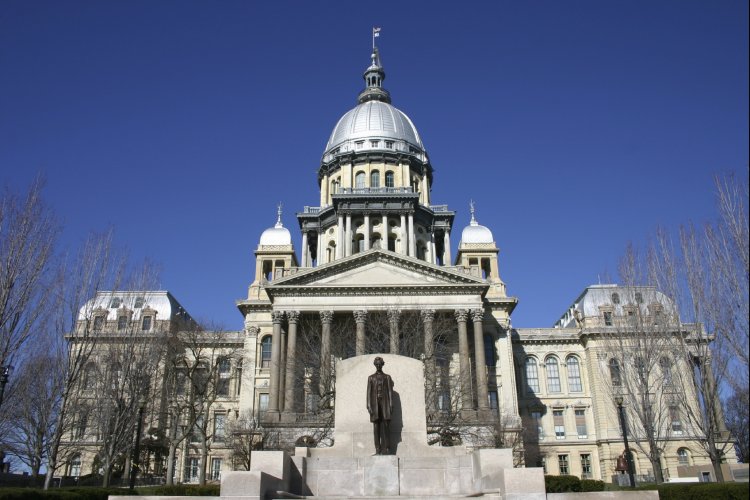
It was an eventful veto session this year in Illinois, with legislators passing the massive energy omnibus known as the Clean & Reliable Grid Affordability (CRGA) Act just after 8 p.m. on October 30, the final day of session. That vote was only the beginning. Legislators went on to pass a transit bill sometime between 3 and 4 a.m. on Halloween morning.
With veto session firmly in the rear-view, let’s dig into the CRGA Act. What does this mean for Illinois and the energy efficiency industry?
Electric Energy Efficiency
After five amendments to SB 25 in October, the electric energy efficiency sections of the bill remained the same as they were when MEEA covered them in our earlier blog: Preparing for Illinois Veto Session: What’s in the Energy Omnibus that Could Get a Vote in October. The topline is that the bill will eliminate the cumulative persistent annual savings (CPAS) goals and set a 2% annual savings goal for ComEd in 2027 and Ameren in 2029. Read through that blog for more details on the electric EE sections.
Once signed by the Governor, CRGA will go into effect on June 1, 2026. This means electric investor-owned utilities will have to file updated 3-year EE plans on June 1, 2026. These plans would run from January 1, 2027 through December 31, 2029. It’s going to be a busy first half of 2026 in the Illinois Stakeholder Advisory Group as utilities and stakeholders negotiate updated plans for the second year in a row.
Plans return to a 4-year planning cycle thereafter, with the 2030-33 plans due March 1, 2029.
Gas Energy Efficiency
One of the biggest changes to the bill during veto session was the inclusion of gas energy efficiency in Amendment 5. The original version of the bill, introduced back in February, did include significant updates to gas energy efficiency, but the provisions were dropped from the bill during legislative negotiations in the spring. In the final week of veto session, after more negotiations between utilities, stakeholders and legislators, a pared-down gas EE update was added back into the bill via amendment.
The updates in Amendment 5 allow for a voluntary gas energy efficiency program increase for Nicor Gas, Peoples Gas and North Shore Gas. Ameren’s gas EE program remains unchanged. Under current law, gas utility spending on efficiency is capped at 2% of revenue from eligible customers. This spending limit has severely hampered utilities’ ability to meet their annual savings targets. Under the new voluntary program, single-fuel gas utilities will be able to increase their energy efficiency spending to up to 5%, subject to Illinois Commerce Commission (ICC) approval. The ICC will be able to consider plan filings with increased spending so long as the plan achieves more savings than it would have without an increase, remains cost-effective and prioritizes income-qualified and weatherization measures.
Nicor Gas, Peoples Gas and North Shore Gas will be eligible to submit modified plans by June 1, 2026. They are not required to, however, as the program is voluntary.
Integrated Resource Planning and More
The 1,021-page bill also includes a new statewide Integrated Resource Planning (IRP) process to be overseen by the Illinois Commerce Commission, in consultation with the Illinois Power Agency, Illinois Finance Authority, Illinois Environmental Protection Agency and utilities. The first IRP will be due to the ICC no later than November 15, 2026. The second IRP will be due September 30, 2029, and then once every four years by September 30 after that.
CRGA is a massive bill containing significant energy policy changes beyond EE. Two other notable elements are the creation of a virtual power plant (VPP) program to reduce peak demand and the institution of time-of-use rates for electric investor-owned utilities and alternative retail electric suppliers.
The bill moves next to the Governor’s desk for signature and goes into effect June 1, 2026. As we’ve already mentioned, however, the impacts of this legislation will be felt in energy efficiency circles long before, as updated EE plans will be due the day the bill goes into effect on June 1, 2026.