As the energy efficiency landscape evolves, so do the needs of our workforce. Innovative training programs are emerging across the Midwest to prepare another generation of tradespeople in skills that are critical to our sector. At the same time, employers are seeking to hire for jobs as incumbent workers are aging out. Training providers and employers should be able to mutually benefit one another, but challenges persist in the workforce pipeline. These include limited awareness of energy efficiency careers among jobseekers, misalignment between training curricula and rapidly evolving industry needs, and insufficient opportunities for trainees to gain hands-on experience with employers. Without intentionally designing training programs to align with employer needs, we will continue to see a fragmented workforce landscape with jobseekers lacking sufficient career prospects and employers not receiving enough qualified applicants to fill roles. MEEA sought to help bridge these gaps by convening stakeholders at the Midwest Energy Solutions conference in a workshop to share their challenges and successes with one another.
The “May the Workforce Be with You” conference session began with opening remarks from Jackie Gallo of Revolution Workshop, a MEEA member that trains individuals from underserved parts of Chicago in the building trades and supports job placement for trainees. Gallo highlighted how Revolution Workshop addresses trainee barriers to employment by providing wraparound services and building strong relationships with employers, setting the stage for the discussions that followed.
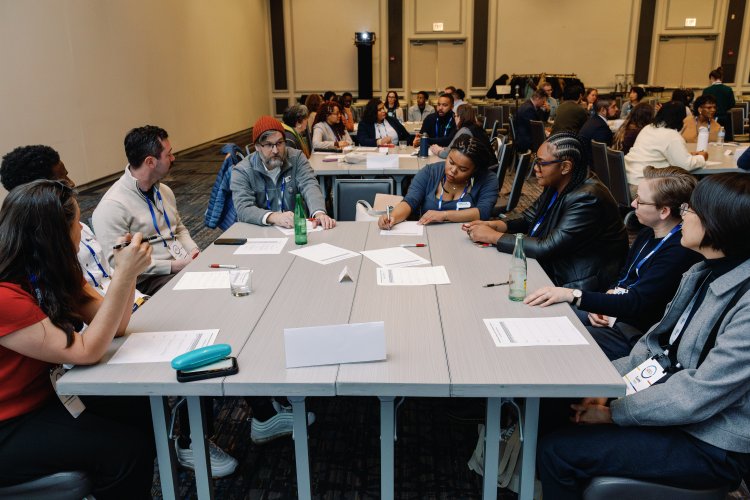
Attendees were split into tables that focused on either the employer perspective or training provider perspective to identify the most pressing barriers and needs for their respective points of view. Key themes emerged, including the need for soft skills, digital literacy, wraparound services, and career pathway awareness.
After the initial discussion, groups switched into table configurations comprised of half employers and half training providers. They discussed their respective barriers and how to collaboratively leverage resources and expertise to break them down.
Some conversations focused on strategies to support workforce reentry for returning citizens such as bond programs that mitigate hiring risks for employers. Participants from both perspectives agreed on the need to build and maintain strong relationships so that training programs can guide employers towards successful strategies for integrating returning citizens into their workforce. These sustained connections aid in reducing recidivism and increasing sustained opportunities.
Other groups focused on the importance of ensuring that training design is employer-driven to ensure skills alignment. Employers want to know that the people they are hiring have the right soft and hard skills to succeed in the job. Training providers want high placement rates for their trainees with sustained employment by getting the right people with the right skills into the right jobs. Again, the theme of deepening relationships between employers and training providers proves essential. Attendees also emphasized the importance of wrap-around services for trainees from underserved backgrounds, especially with regard to transit access. Without access to reliable transit, newly trained employees often do not show up consistently enough for employers. Training providers often give participants transit vouchers to mitigate this concern. In her introduction to the workshop, Gallo explained a program that Revolution Workshop has piloted, working with partners to back car loans for participants. Many participants mentioned that this outside-the-box approach stuck with them and that they were interested in finding ways to replicate it.
The conversations were wide-ranging and passion filled. Some table groups were still deep in conversation 20 minutes after the workshop ended. MEEA hopes to continue facilitating connections on these important issues through its member workforce committee. If you are interested in joining or learning more about the committee, reach out to Henry at hedelstein@mwalliance.org.